What is Generative Engine Optimization and Why it Matters
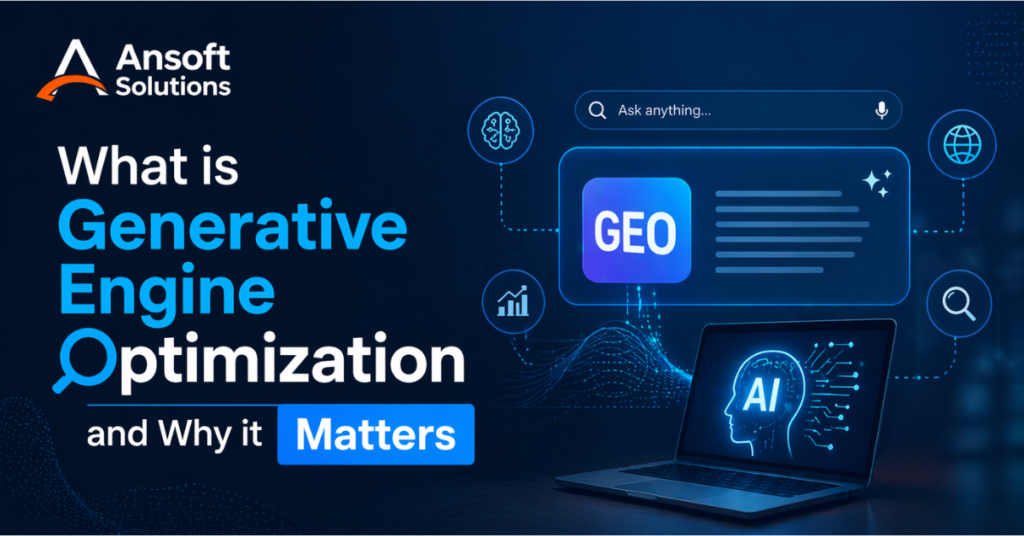
Search is no longer just about ranking on Google. But with the rise of AI answer engines, a new discipline has emerged and they are known as generative engine optimization. They are shaping how a brand will appear online and people are asking what is generative engine optimization. In simple words, GEO is known as the process of gathering data at one place, using credible data and sources.
Generative Engine Optimization is the process of optimizing content so that it gets cited, summarized or referenced by AI systems like ChatGPT and Google AI Overviews. This happens when you ask questions to such AI tools, and gather the data that matches perfectly with your content.
According to Bain & Company, 80% of users rely on zero-click results in at least 40% of searches. This means that your visibility now depends on being included in AI-generated responses, not just ranking.
Also understand how you can optimize your website for AI in 2026.
What is Generative Engine Optimization?
At its core, generative engine optimization can be answered simply, and that is:
GEO is the practice of structuring and enhancing content so AI models can easily understand, trust, and cite it in generated responses.
The concept was formally introduced in a 2024 ACM KDD research paper by teams from Princeton, Georgia Tech, and IIT Delhi. Their findings showed that GEO strategies can increase content visibility in AI responses by up to 40%.
Unlike traditional SEO, GEO isn’t about keywords and backlinks alone. But it’s more about:
- clarity and context
- structured information
- credibility signals
- factual depth
For example, if you search in an AI tool for how to rank a website, the answers you see will match your requirements.
How Generative Engine Optimization Works
If you want to understand how generative engine optimization works, then you should first understand how AI systems choose content.
Generative engines do not simply rank pages. They:
- Retrieve relevant sources
- Check for trustworthiness and clarity
- Look an answer
- Cite selected sources
This means your content must be AI-readable and citation-worthy to be picked by AI answer tools, but not just keyword-optimized.
What are the Key mechanisms behind GEO
Here is a list of key mechanics working behind GEO. You can understand the key mechanics here-
- Content depth and completeness
Studies show long-form and comprehensive content gets 4.3x more AI citations. That means, you should write relevant content in a long format. - Structured formatting
Pages with clear headings, FAQs and schema markup see 44% higher citation rates. Structured formatting makes it easy for bots to crawl and scan your website from top to bottom. - Use of statistics and sources
Adding credible data improves visibility significantly. Using data and sources in your content, build an authority and show your website as a trusted one. The data shows:
- statistics: +41% visibility
- quotations: +28%
- citations: up to +115% for lower-ranked pages
- Freshness and updates
Content updated within 30 days can see a 3.2x increase in AI inclusion. That’s why nowadays, most website owners are updating their websites frequently. - Brand and authority signals
Brand mentions correlate far more strongly with AI citations (0.664) than backlinks (0.218), according to Ahrefs reports.
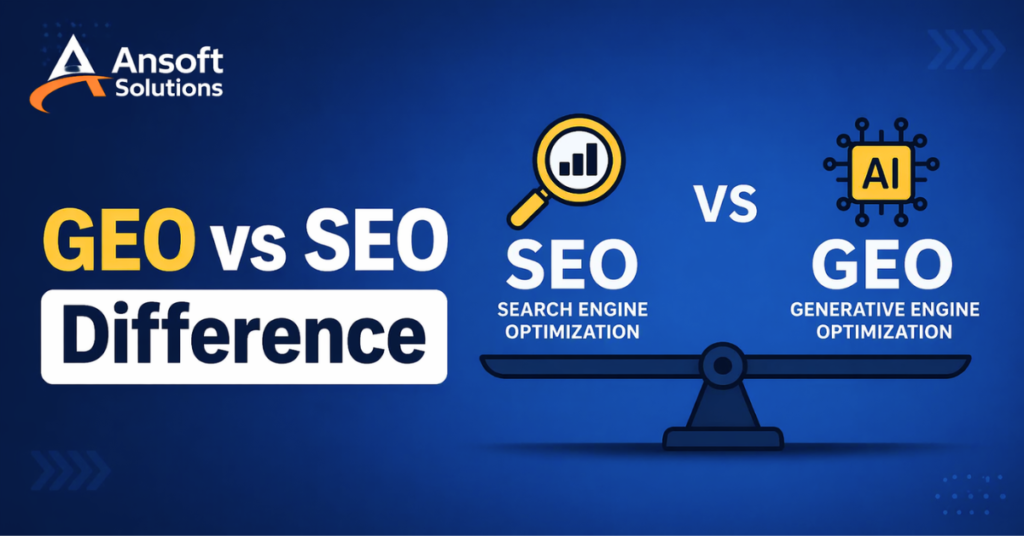
GEO vs SEO Difference
The GEO vs SEO difference is one of the most important shifts in digital marketing today. And to optimize your website, understanding this difference is crucial.
Traditional SEO focuses on ranking pages. While, GEO focuses on being selected as a source inside AI answers.
Here is the practical distinction that creates a difference between SEO and GEO.
SEO (Search Engine Optimization):
- Optimizes for rankings on search engines
- Relies heavily on keywords and backlinks
- Success is clicks and traffic
GEO (Generative Engine Optimization):
- Optimizes for AI-generated responses
- Relies on clarity, authority and structured content
- Success is citations and visibility in answers
The difference is not theoretical. Research shows:
- 83% of AI citations come from pages outside Google’s top 10
- 80% of cited pages don’t rank in the top 100
This proves that GEO is not just an extension of SEO. It’s a parallel system with different rules, where direct answers are favourable.
Still not sure, how can a brand improve their search ranking? Read our latest case study on – how we help a business to increase their search ranking
What is AI Search Optimization?
You might also hear the term AI search optimization, which is closely related to GEO. And before moving forward in this, what is generative engine optimization guide, understanding about AI search optimization is beneficial.
AI search optimization is a broader concept that includes:
- optimizing for AI chatbots
- optimizing for AI Overviews
- optimizing for conversational queries
GEO is a subset of AI search optimization, specifically focused on getting cited in generated answers.
Why Generative Engine Optimization Matters Now
The importance of generative engine optimization becomes clear when you look at market trends.
1. Search behavior is changing
Gartner predicts a 25% drop in traditional search volume by 2026 as users shift toward AI tools.
2. AI answers are replacing clicks
Publishers report traffic losses of up to 40% due to AI-generated summaries. This shows that users are trusting AI answers more than searching manually.
3. AI visibility drives real business impact
- AI traffic to retail sites grew 1,200% year-over-year
- AI visitors convert 4.4x better than traditional organic traffic
4. Results are highly dynamic
AI-generated answers change frequently:
- content shifts in 70% of repeated queries
- only 30% of brands remain visible consistently
This volatility makes GEO an ongoing process, not a one-time optimization. So that means you have to keep updating your website by publishing optimized content.
Key Strategies to Succeed in GEO
If you want to benefit from generative engine optimization, then you should focus on a few key points.
These points includes:
- writing in a clear, structured and question-answer format
- including original data, statistics and expert insights
- building strong brand presence across platforms
- maintaining content freshness
- avoiding overly promotional language
One shocking fact that you might not know is that keyword stuffing performs worse than baseline content in AI environments. So that means creating high quality content is the only option.
Conclusion
Understanding what is generative engine optimization is no longer optional. It is becoming central to digital visibility.
Search is evolving from which page ranks first to which source does AI trust enough to cite.
This shows that GEO represents a shift. Even though SEO still matters, the future belongs to content that is authoritative, structured and backed up by data.
FAQ
What is Generative Engine Optimization?
Generative engine optimization is known as the process of optimising your content for AI tools. This happens when you ask AI tools for an answer and it cites content that matches with your questions.
What are the best Generative Engine Optimization strategies?
The best strategy to optimize your content for GEO is adopting a conversational type answer, focusing on EEAT and adding highly relevant data from reputable sites.
What is GEO in Digital Marketing?
GEO in digital marketing is a combination of generative engine optimization and geographic targeting. GEO focuses on visibility in AI summaries, while geo marketing focuses on improving local ROI through the location specific ads.